Showing posts with label Salzburg. Show all posts

Thursday, 12 July 2018

Gmunden

The sun shone through today and present the glamorous Gmunden in its best light. What a great place to take a stroll along the beautiful esplanade, something that has been happening for centuries. 


Starting with the Seeschloss Ort, Lake Castke Ort, a very picturesque castle built in an small island in Lake Traunsee, and connected to the mainland via a 120 metre bridge. There has even a castle on the site for over a thousand years, with this current castle dating from the 17th century after a fire destroyed the earlier one. The castle is currently owned by the city of Gmunden and has been the setting for a popular Austrian TV series. It is the setting for many cultural events, and a popular wedding location - over 300 couples a year. 


Gmunden is part of the Salzkammergut,  a region around Salzburg that managed the very wealthy salt economy that has made the district rich. In fact, many suggest that it was the salt mines of the region that underpinned the economy of the Habsburg dynasty for hundreds of years. Today the salt economy is of lesser importance. One of the buildings in Gmunden, the Kammerhof, was the home and site of the powerful salt-authority-men. 

Typically, it is the casino that occupies the choice location across the waterfront in Gmunden. Pictures around the waterfront presented an historical representation of the waterfront 150 years ago, with the casino being the main focus of the area. 


Adjacent to the Casino was the Market Square - where a market was operating today - and the Rathaus (Town Hall), signalling the centre of the town. We explored further away from the waterfront and found an interesting older town set back on the hillside with the narrow laneways and tall apartments leading to the church a little further up the hill. 

The Rathaus. 


Some Italian ceramics for sake at the market. 


The Parish Church has some interesting works of art within. The gold ornimentation on all the sculptures was eye catching. The high alter piece had some very interesting characters represented - the only Three-Kings altar in Austria. 


It was well into the afternoon at this stage, and the day was warming up, so we headed black to the van for lunch and the rest of the afternoon. 

Wednesday, 11 July 2018

Bad Ischl

Woke early this morning with heavy rain on the roof , we sensed then that this could be the start of a day of wet weather. The mountains on the other side of  the Hallstätter See (lake) were partly covered with clouds. 


The rain had stopped by the time we left for Bad Ischl, the Spa town that became fashionable in the 19th century after Emperor Franz-Josef built a summer residence, the Kaiservilla, here in 1856. 

Unusually potent saltwater springs were discovered in this region as early as the 16th century, but Bad Ischl did not become a popular health resort until the early 1800s, when the court doctor ordered saline treatments for the infertile Archduchess Sophie. Soon, she started producing babies. The most famous of these was Franz Joseph I, the future emperor, who spent all his summer holidays with his wife Elizabeth at the Kaiservilla.

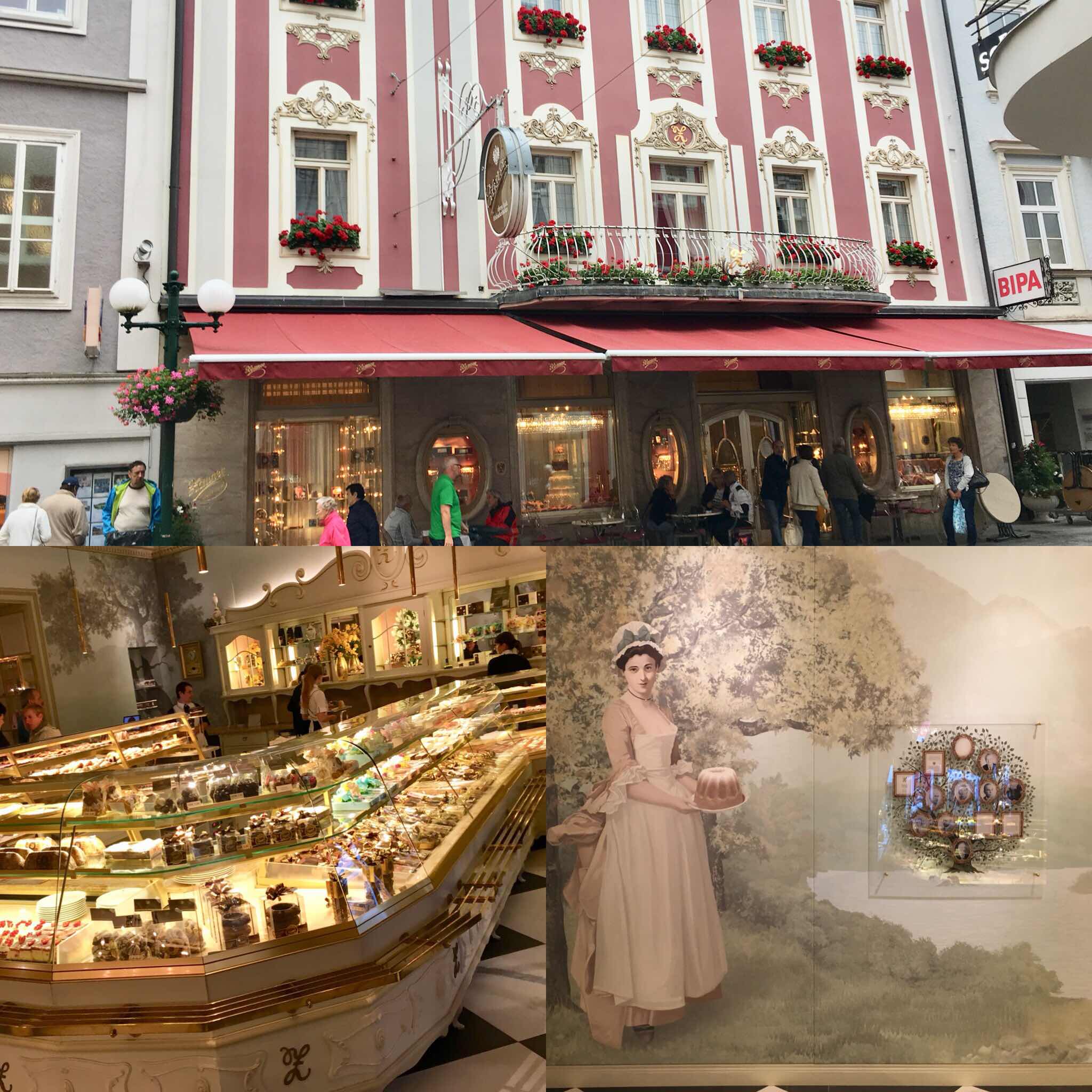
No luck, though, with the rain, it started again as we parked the van in Bad Ischl. With the weather against us, we set off to explore the town. The first icon of the town we came across was the Konditore Zauner pastry and chocolate shop, which had the regular patronage the Emperor Franz-Josef. 


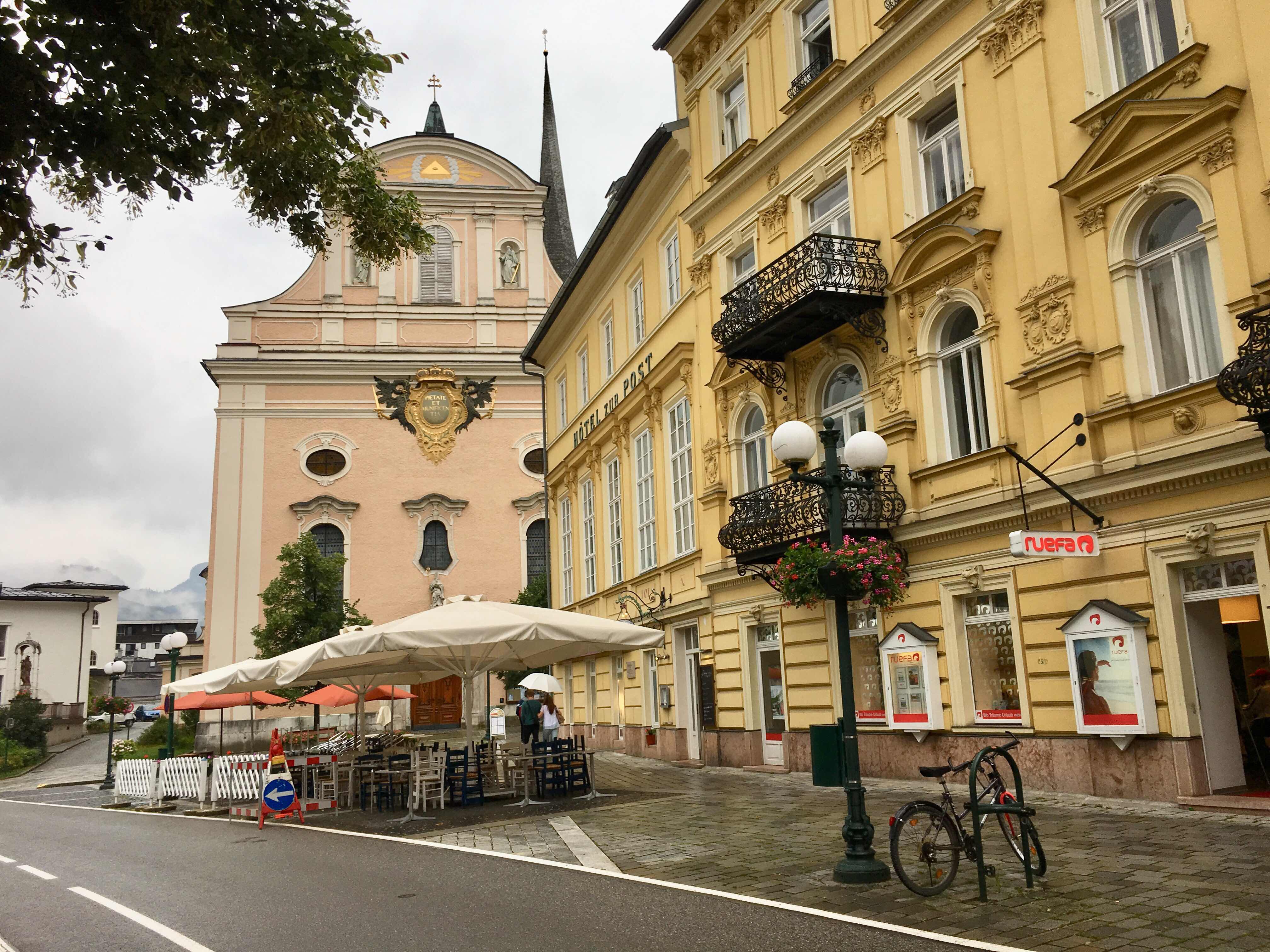
We later ventured into the 14th century church of St Nicholas with its 72 metre high tower and its ornate freaks and mosaics.  


Opposite was the Trunklhalle, originally the pump house for the spas but now the cultural centre for the town. 


The Kaiservilla was on our list to visit but we were informed that the only way to see the place was via a guided tour in German! Plus, the rain was still falling so the stroll in the Kaiserpark was out of the question. The Kaiservilla has etched its place in history for it was here in 28th July 1914 that Franz-Josef signed the declaration of war against the Kingdom of Serbia, signaling the start of WW1. 

The main festival in the town  is the celebration of the Kaiser’s birthday. The infant Archduke and Crown Prince Franz-Josef's first birthday was celebrated in Ischl on 18 August 1831.  This was a case for jubilation, the long-awaited heir to the throne had at last arrived. From around 1834 Franz Josef celebrated every birthday as Crown Prince while resident  in Bad Ischl. He missed his 18th birthday in Ischl in August 1848, due to the revolutions throughout the Monarchy, but with one exception thereafter (the 1878 Balkan crisis) he spent every birthday of his life in Ischl up to 1913. The annual celebrations attained imperial proportions after he became Emperor on 8 December 1848. And, it now continues to this day. 

Some other photos from around the Bad Ischl:


We left raining Bad Ischl to those that may follow, hopefully, not in the rain. Our drive took us along the edge of Traunsees, where at the top of the lake we arrived at Gmunden, our overnight stop. Our first meeting of another GB 🇬🇧 since our first night in France five weeks ago!

Tuesday, 10 July 2018

Bad Aussee

Just wanted to use that title for today’s blog! But, we did visit the town this morning, after leaving Pürgg late morning. 
Bad Aussee is the centre for a number of lake districts within the region. It also sits on the confluence of the streams that make the Traun River. It is claimed  that Bad Aussee is the geographic centre of Austria. Being a Bad (Spa) town there are many establishments that support the spa and health industry. 

The town was well organised and attractive, like many Austrian towns. It was interesting to see the number of men and women dressed in traditional Austrian dress going about their daily business. And to support this, we counted three shops within the centre square selling the traditional fashions, both clothing and fabrics - and not cheap either!


Salt has been the main source of revenue for the town since mines opened during the Middle Ages.  Ski tourism is also critical to the town these days.  


We drove on towards Hallstatt where we stopped by the lake to have our lunch. After lunch we continued on to Hallstatt for a quick visit before returning to the lakeside for the rest of the afternoon and evening. 

The town of Hallstatt crammed into the space between the mountain and the lake. 

Our overnight site by Hallstätter See - with friends. 

Our overnight spot by Hallstätter See. 

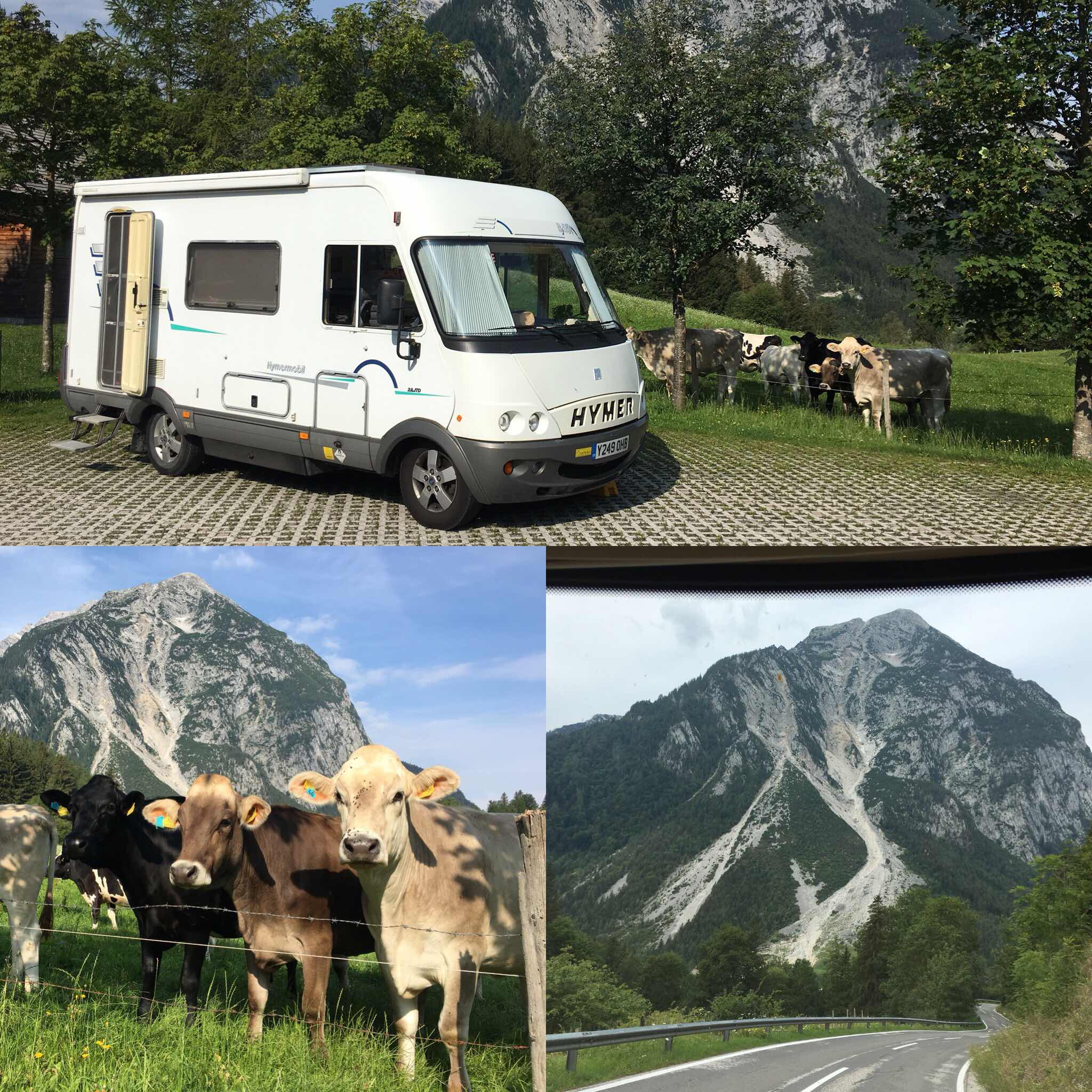
The privilege of motorhoming - enjoying the good things of life inside whilst the others have the weather to contend with!

Our friends greeting us this morning! And, the avalanche danger is ever present around the area. 

Monday, 9 July 2018

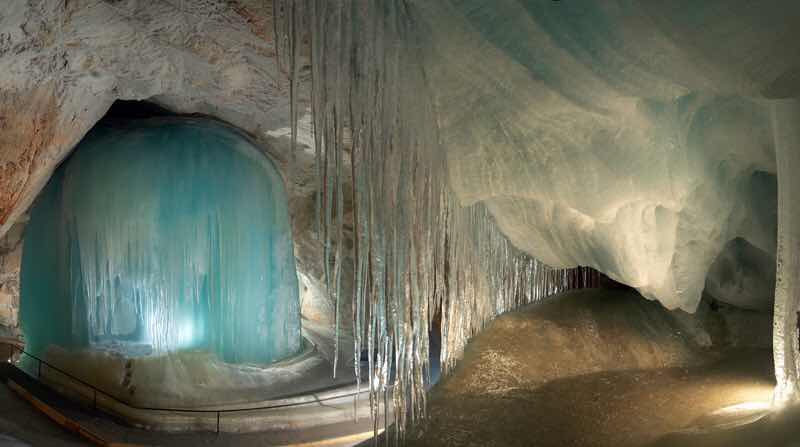
Eisriesenwelt - The World of Ice Giants

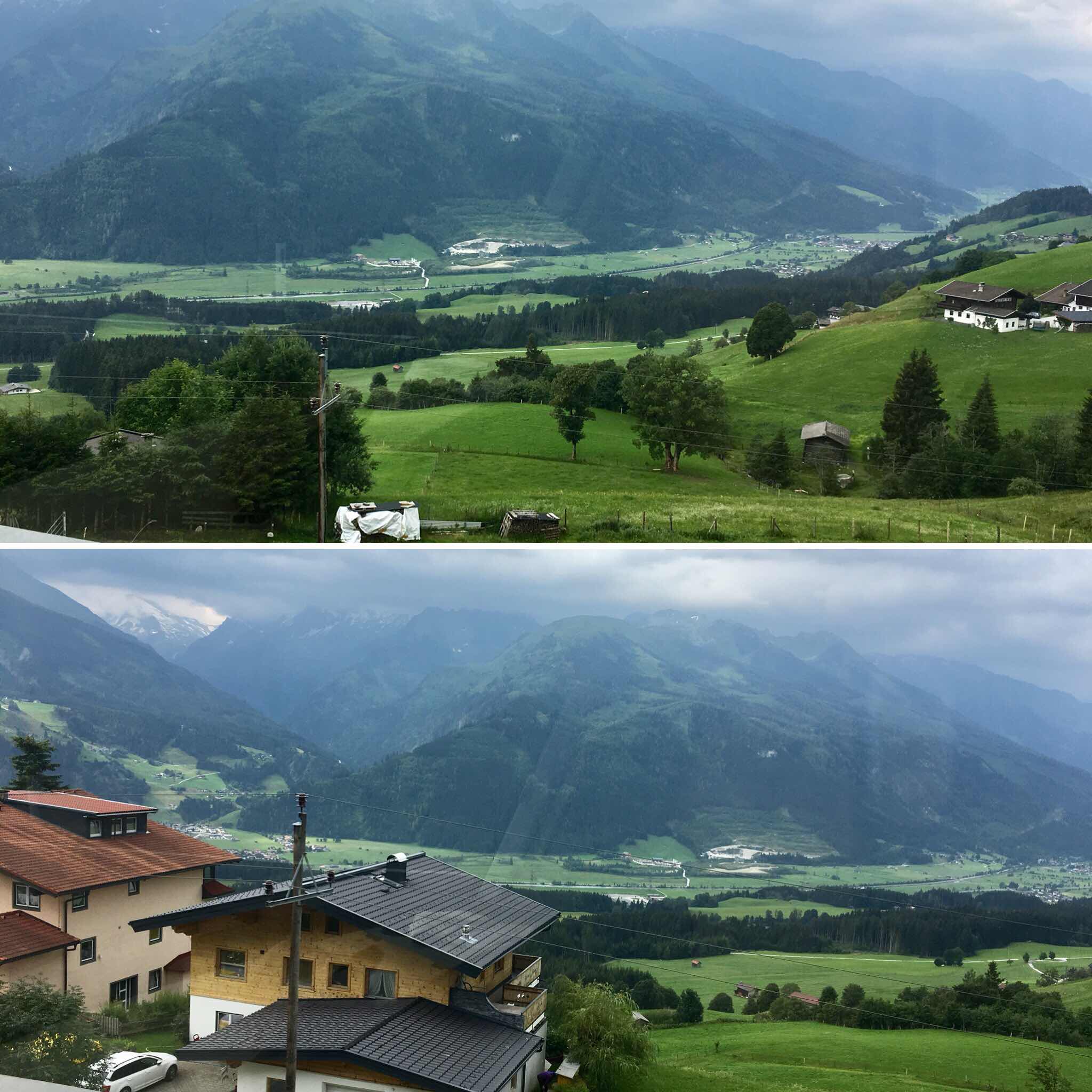
An earlier start this morning as we had planned to visit the famous ice caves, Eisriesenwelt, at Werfen. We followed the Salzach River through the Salzach Valley until we reached Werfen - dominated by the huge mountains on either side of the valley. The sun had emerged at last from behind the clouds that had been hiding it for the past few days. The scenery, it goes without saying, was stunning again. 

Approaching Werfen we were struck by the view of the dominating castle, Burg Hohenwerfen, which featured in the opening scenes of the movie, “The Sound of Music”. (“The hills are alive with the the sound of music.”)  Hohenwerfen fortress, built on a rocky outcrop, dates back to the 11th century. 


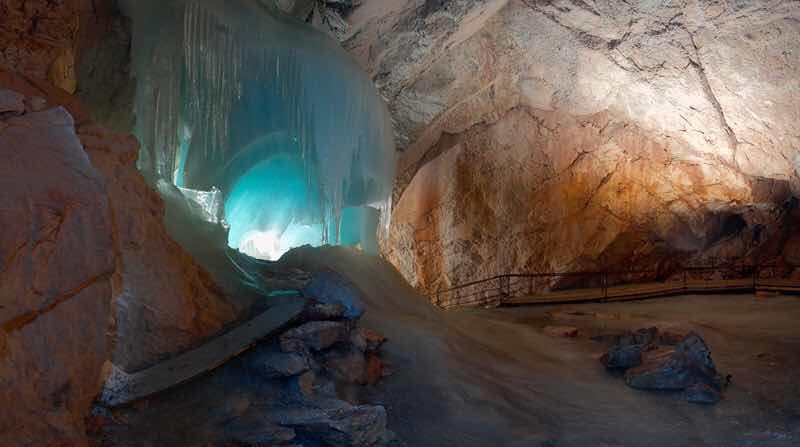
The visit to the Eisriesenwelt (Giant Ice World) was the highlight of the day. Eisriesenwelt is one of the world’s largest cave systems. It has dramatic ice formations and superb ice galleries. Some 42 km  have been explored so far, but our tour only took us in 1 km - BUT,  700 stairs later we had arrived at the furthest and highest point of the tour. 

The temperature in the caves was zero degrees, so we had to virtually put on all the warm clothes we had,  to prepare for the drop in temperature. Also, our tour was going to last 75 minutes, and there was no turning back!

Before we tackled the 700 steps (some near vertical stairs in some parts) - the equivalent of  a high rise building - we had  two,  thirty minute up-hill walks, and a cable car ride, before we reached the entrance of the cave. No pain, no gain! The ascent to the cave entrance was stunningly breathtaking (and, breathless!). 


The caves have been a tourist attraction for the past 100 years, but then it was a two day venture  - no cable car, or steps, as we are provided today. In entering the cave you are hit with a gale force wind,  with the cold air that had settled in the lower part of the cave was attempting to rush out down the valley. In winter, we were told, the reverse happens - all about temperature difference between the inside of the cave and the outside. 

We were led through the cave by a guide who explained the history of the cave and pointing out major ice formations as we went.  The frozen waterfalls, glaciers, stalactites and ice curtains are part of what is on display. There was no artificial lighting - we all carried a tradition miners lantern. The stunning ice formations are forever changing due to climatic events on the outside. By the time we had reached our 700 steps,now at a height of 1700 metres,, it was then downhill for another 700 steps! Regardless of the step challenge, it was an extremely worthwhile detour. 


Our trip down the mountain was much less exhausting than the earlier climb. We felt a little snug as we passed visitors on their way up - we knew what was in store for them! Some wonderful views of the village and the Burg were gained on the way down. 


After lunch we were back on the road and headed for a restful stopover at Pürgg, a small village sitting under a mountain prone to avalanches - the swimming pool and the tennis court have been closed because of the possible danger. It hasn’t stopped one hardy chap who is in the process of building his house right next to a large boulder that fell from the mountain 200 years ago.!


We were well away from the damaged area!


Sunday, 8 July 2018

Zell am See


Waking high on the Pass Thurn presented us with a much cooler morning. Early,  the valley was covered in mist but it cleared by the time we descended into Mittersill down in the Salzach Valley.  


We stopped in Mittersill, at the bottom of the Pass Thurn,  for a mid morning walk around the small lake, before continuing on to the village of Niedernsill. Here again, we saw the evidence of the importance of the timber industry, with a huge mill at the near centre of the village.  


Zell am See was our major destination for today. These days Zell am See is noted for its amazing mountain scenery - particularly in the winter season - and the winter sports that are vital to the community. The Romans at some stage passed this way, after them came an order from the Bishop of Salzburg for monks to found a town, or a monastic “cella”, Napoleon came by later, before the railway arrived in 1875 and the summer and winter tourist onslaught brought real wealth to the town. 


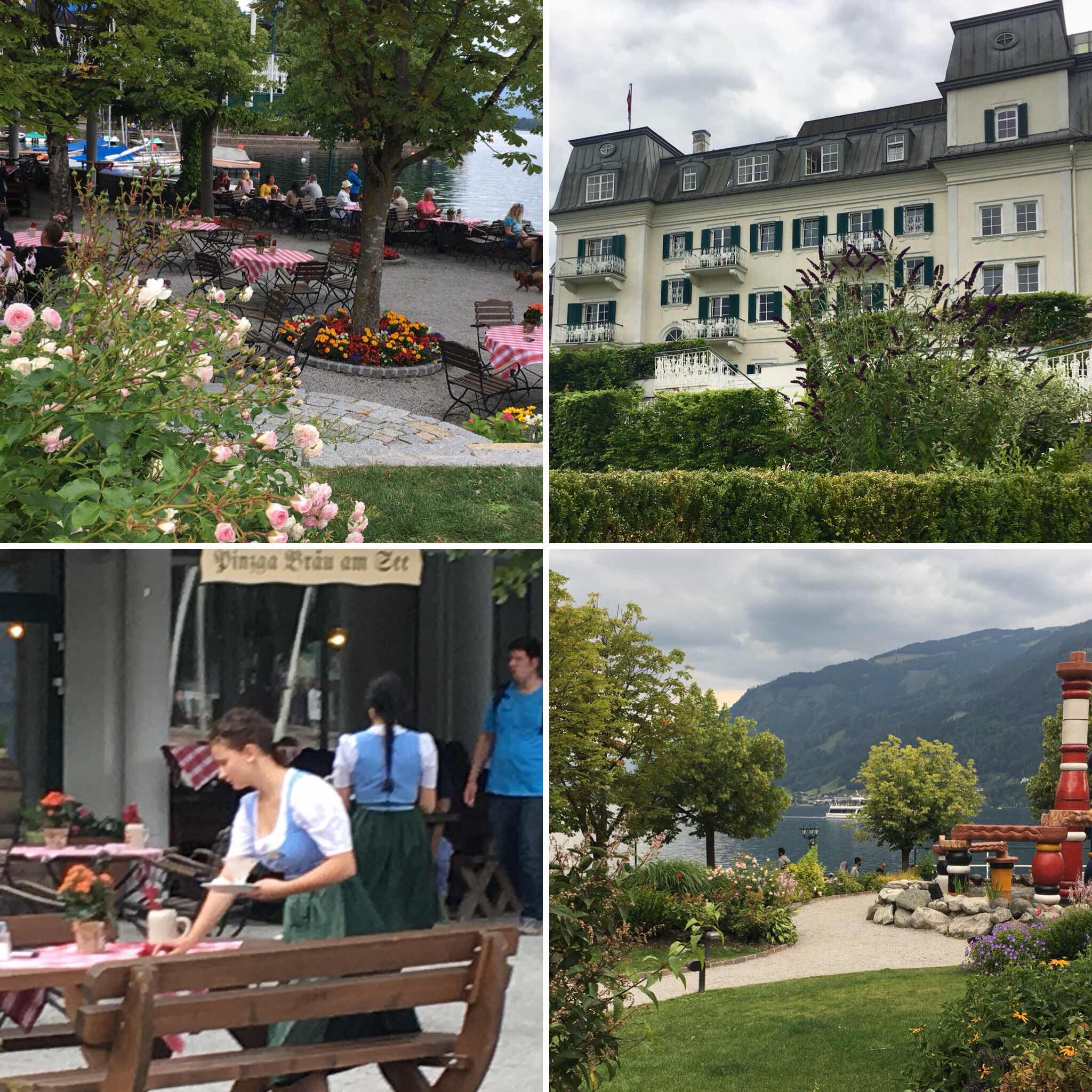
The lakeside was very picturesque even though the day wasn’t the brightest, with off and on rain the order of the day. We took a long walk along the esplanade and pondered what it may look like in the winter months - perhaps a winter trip at some stage in the furlture! 


The summer and the winter scenes as depicted on a display board (plus graffiti). 

A short drive brought us to our overnight stop at Bruck an der Großglocknerstraße by the Salzach River.